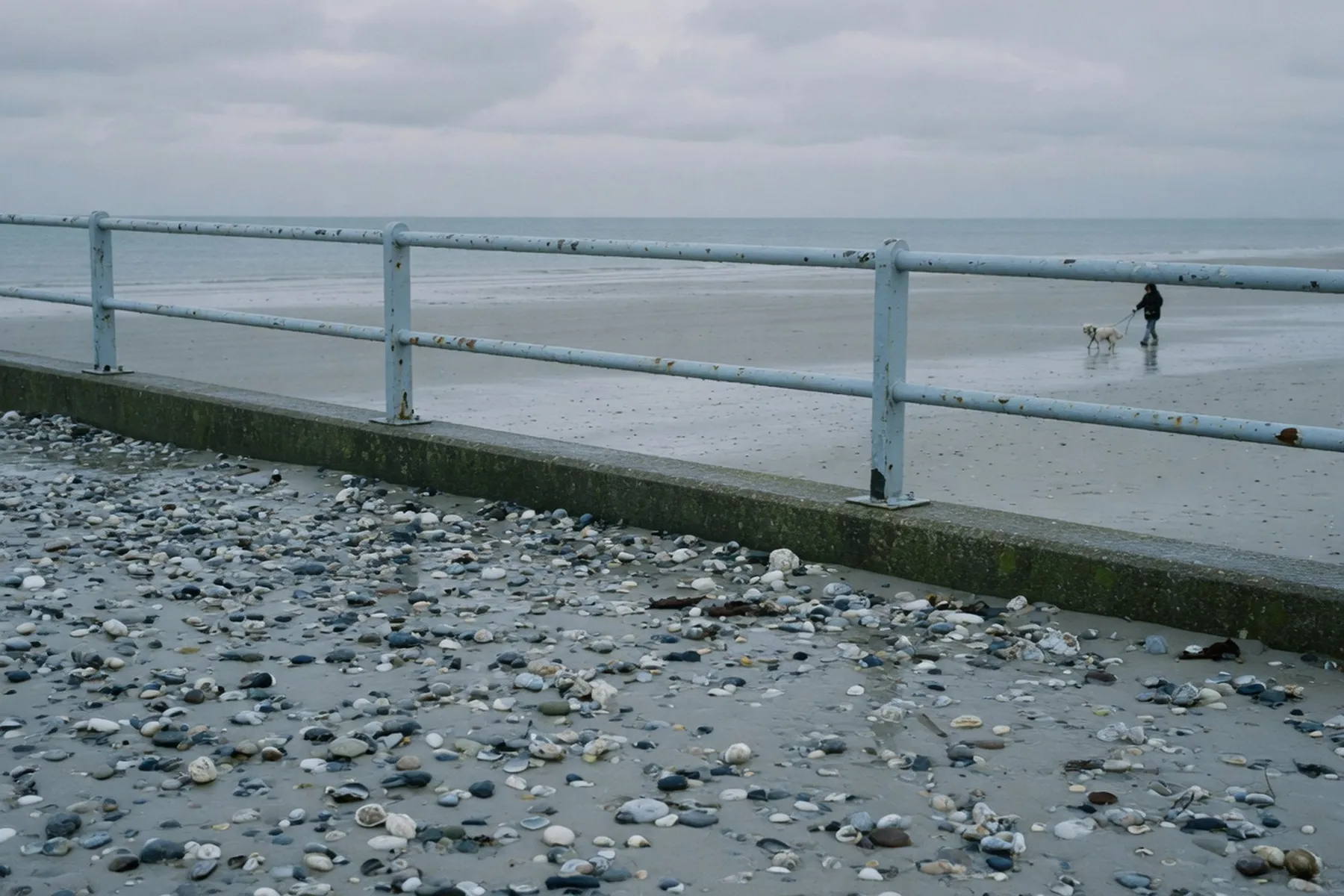
Eastbourne works for a dog in a way many seaside towns do not, but only if you read the small print first. The beach directly in front of the town is closed to dogs for five months of the year; the beaches where dogs are welcome all year sit a little further west; and the rules change again east of the pier. Get the three zones straight and everything else — the Downs, the parks, the places that actually want your dog — falls into place. This page sets out the beach rules from the council’s own wording, then the ground a dog genuinely gets to enjoy.
Eastbourne Borough Council’s beaches page on lewes-eastbourne.gov.uk is the one source worth trusting, and it splits the shoreline into three strips. The main resort beaches run from Wish Tower to the Pier, and from 1 May to 30 September dogs are banned from them. Outside that window, from 1 October to 30 April, the ban lifts and the same stretch opens up again.
West of that, below the chalk cliffs, Holywell and Falling Sands read differently. The council’s wording is that “dogs are welcome on these beaches but must be kept under control,” and it states no seasonal ban, which makes these two the all-year choice. East of the pier, East Beach runs towards Sovereign Harbour and settles for a compromise: from 1 May to 30 September dogs must be kept on leads at all times and are banned from the main resort beach. The council also notes that East Beach is a water sports area and that some of its working beaches are not suited to bathing.
The same page lists lifeguards, a children’s wristband scheme, showers, deckchairs, bathing cabins and a beach shop. Anything that shifts with the season is on that page, so treat the council site as the record, not this article.
Holywell and Falling Sands sit under the chalk cliffs on the western edge of town, and they are where a dog gets proper beach time rather than a lead walk past one. The council recommends both of them, alongside the Pier to Wish Tower area, through the Marine Conservation Society’s Good Beach Guide — that recommendation is about water quality rather than dogs, but it is still a useful steer. The beaches themselves are the wilder end of Eastbourne: shingle, rock pools at low water, and the cliffs rising behind.
The caveat is in the council’s own phrase. A dog is welcome here “but must be kept under control,” which in practice means close enough to recall when the pool-splashing stops and a family with a picnic appears further along. These are not fenced runs. They are beaches first, and the dog’s place on them is earned by recall.
When the central beach is closed to dogs in summer, the promenade is not. VisitEastbourne puts the seafront at four miles of promenade, and a lead walk along it — past Eastbourne Pier, the bandstand and the Carpet Gardens — works in any season. From October to April the central beach itself is back in play too, so a winter walk can drop down onto the shingle whenever the dog’s energy needs it.
The summer trade is simple to state. On the main resort beach a dog is not welcome between the dates above, but the promenade alongside runs level and paved for the full stretch, so the walk itself never closes. The pier and seafront piece covers what you pass on the way.
Hampden Park is the town’s other big open space, just under three kilometres north of the centre and five hundred metres west of Hampden Park railway station along Rosebery Avenue, at BN22 9QR. It is flat, largely vehicle-free, and old enough to have a proper history: opened in August 1902 on land sold to Eastbourne Corporation by Lord Willingdon, it was the first publicly owned park in the town, and the lake and woodland on the north side began as a wildfowl decoy — hence Decoy Pond and Decoy Wood.
For a dog the useful bits are the lawns, the specimen trees with picnic tables, the Arboretum and History Garden on the north side (free, opened in 2008), and the aromatic herb garden east of the pond. The Lakeside Café is normally open all year except Christmas Day, and the park also carries toilets, a playground, bowls clubs, tennis courts, football and rugby pitches, skate ramps and a BMX pump track. What the council’s page does not spell out is the dog detail — where a lead is required, whether dogs are allowed near the playground, the café terrace rules. Check the signs in the park for those, because the page is silent on them and guessing is how you end up the person a warden is watching.
The Downs are why a dog owner bothers with Eastbourne at all. The South Downs National Park Authority’s “Take the Lead” page puts it plainly: responsible dog walkers are very welcome, with miles of footpaths and bridleways across hilltops, riversides, heathland, forest, farmland and historical sites. The authority asks for four things in return.
Keep dogs away from rivers and ponds and on the path. Keep them on a lead near grazing animals and wildlife. Bag the poo and bin it — any public bin is fine. And protect ground-nesting birds by sticking to paths, especially between 1 March and 15 September, when nests are live. Two more cautions sit on the same page: do not enter military training areas when red flags are flying, and take extra care in spring, when pregnant ewes are in the fields and young livestock are at their most vulnerable.
The National Park’s wording matters more on the chalk than anywhere, because a lead is about the dog and the drop at once. Around Beachy Head and the Seven Sisters the cliffs are fragile and the edges real, so “on a lead near grazing animals” turns into “on a lead, full stop” whenever the path runs close to the rim. The authority’s nesting-window advice is to stick to paths between the dates above, and that is the sentence to obey on the clifftop walks the site already covers — the routes themselves are in the Beachy Head and Seven Sisters guide and the walks collection, and the Seven Sisters Country Park page sets the wider scene.
The town wears its dog credentials formally. VisitEastbourne, the official tourist board, announced that Eastbourne was voted one of the UK’s most dog-friendly destinations for a second year running: a silver at the national Dog Friendly Awards in 2024, after a bronze in 2023. The award was collected by Karey Whitmore, who writes Eastbourne’s Dog Friendly Guide, on behalf of VisitEastbourne, alongside the Friends of Eastbourne Seafront and the Chatsworth Hotel. That partnership produced the guide itself, a venue recognition scheme and dog-friendly events — which is a more useful thing to know than any single list of names.
This is where the internet lets a dog owner down. The “dog-friendly Eastbourne” lists that rank well are mostly third-party directories, and a directory entry from three summers ago does not survive a change of landlord, a new kitchen policy or a garden refurbishment. The honest pointer is the VisitEastbourne Dog Friendly Guide: venues join a recognition scheme, the guide is updated as the list changes, and it is the operator’s own answer to “where can we actually sit down with the dog.” Use that rather than any list this article could print and then watch go stale. For the town’s wider eating picture the where to eat piece sets the scene.
The one genuinely dog-focused event in the coming weeks is Santa Paws, on 7 and 8 December 2026, run by the Friends of Eastbourne Seafront, where dogs meet Mr and Mrs Santa Paws for a festive photograph and a gift — check the Friends of Eastbourne Seafront nearer the date, because event details move. A quieter note for walkers: the Beachy Head Marathon falls on 24 October 2026 and the half marathon the day after, and the route crosses the Downs around Beachy Head, so the clifftop paths will be busy and marked that weekend. A dog walker who can pick a different day, or a different stretch, will find it calmer; the organiser’s page is on visiteastbourne.com.
Put together, the town reads as a sequence. Start on the beach at Holywell, where the dog is welcome whatever the month and the rock pools do their work early. Coffee follows at whatever the guide lists nearby. Then Hampden Park for the flat open ground and the decoy pond, and an afternoon stretch on the Downs once the day’s heat — such as it is — has passed. Finish in a pub or café from the current Dog Friendly Guide, and check the council’s beaches page before you set out if the season is near its edges. None of the timings here are fixed; the rhythm is the point, and every rule in it comes from the council or the National Park rather than a listicle.